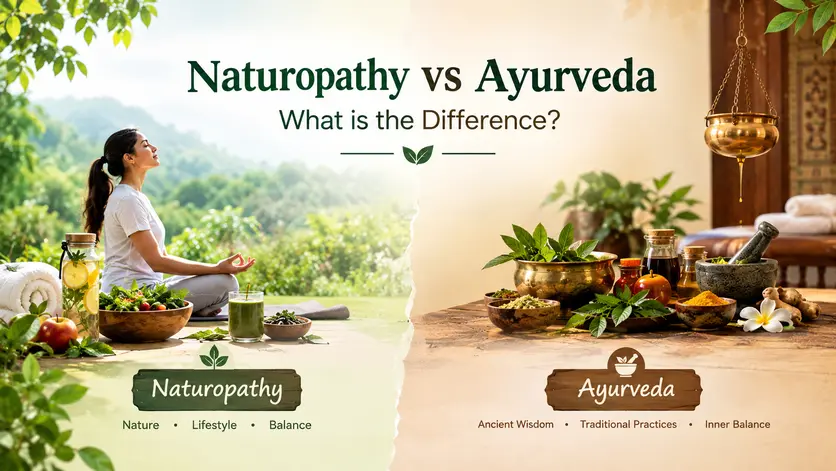
Naturopathy and Ayurveda are two well-known approaches to natural and holistic wellness. Both focus on supporting overall well-being through lifestyle, diet, natural practices, and a balanced way of living. However, their philosophies, traditional backgrounds, and approaches to wellness are different.
Understanding the difference between Naturopathy and Ayurveda can help wellness centres, practitioners, and individuals better understand these approaches and the types of therapies commonly associated with them.
Naturopathy is a holistic approach to wellness that focuses on supporting the body's natural processes through lifestyle and natural methods.
It commonly emphasizes areas such as:
Naturopathy generally places strong importance on healthy lifestyle habits and natural wellness practices rather than relying primarily on conventional medical interventions.
Ayurveda is a traditional Indian system of health and wellness with a history spanning thousands of years. It is based on the concept of maintaining balance in the body and mind and traditionally considers factors such as an individual's constitution, lifestyle, diet, and daily routine.
Ayurvedic practices may include:
Ayurveda has its own traditional concepts and principles that distinguish it from Naturopathy.
Although both approaches focus on natural and holistic wellness, they are not the same.
Origin:
Naturopathy- Developed as a natural wellness system influenced by various traditional and modern natural-health practices
Ayurveda- Ancient Indian traditional system
Main Focus:
Naturopathy-Natural lifestyle, nutrition, wellness and supporting the body's natural processes
Ayurveda- Balance and well-being based on traditional Ayurvedic principles
Approach:
Naturopathy- Lifestyle-oriented and nature-based
Ayurveda- Based on traditional Ayurvedic concepts
Common Practices:
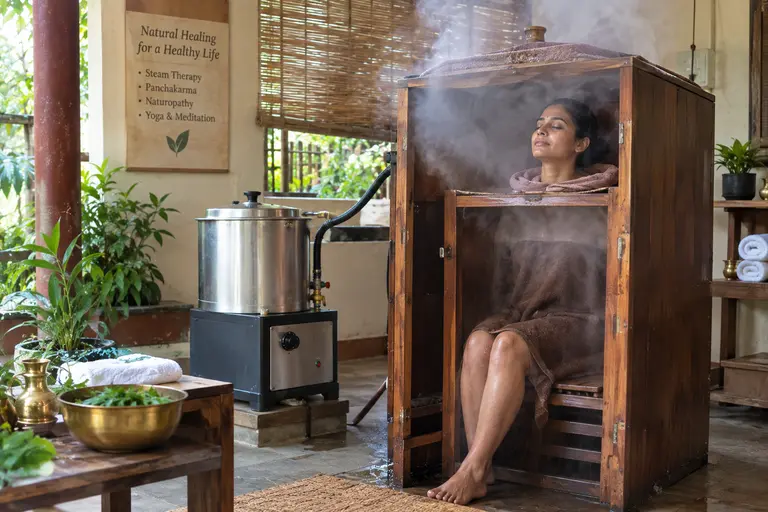
Naturopathy- Hydrotherapy, mud therapy, steam therapy, yoga, massage and nutrition
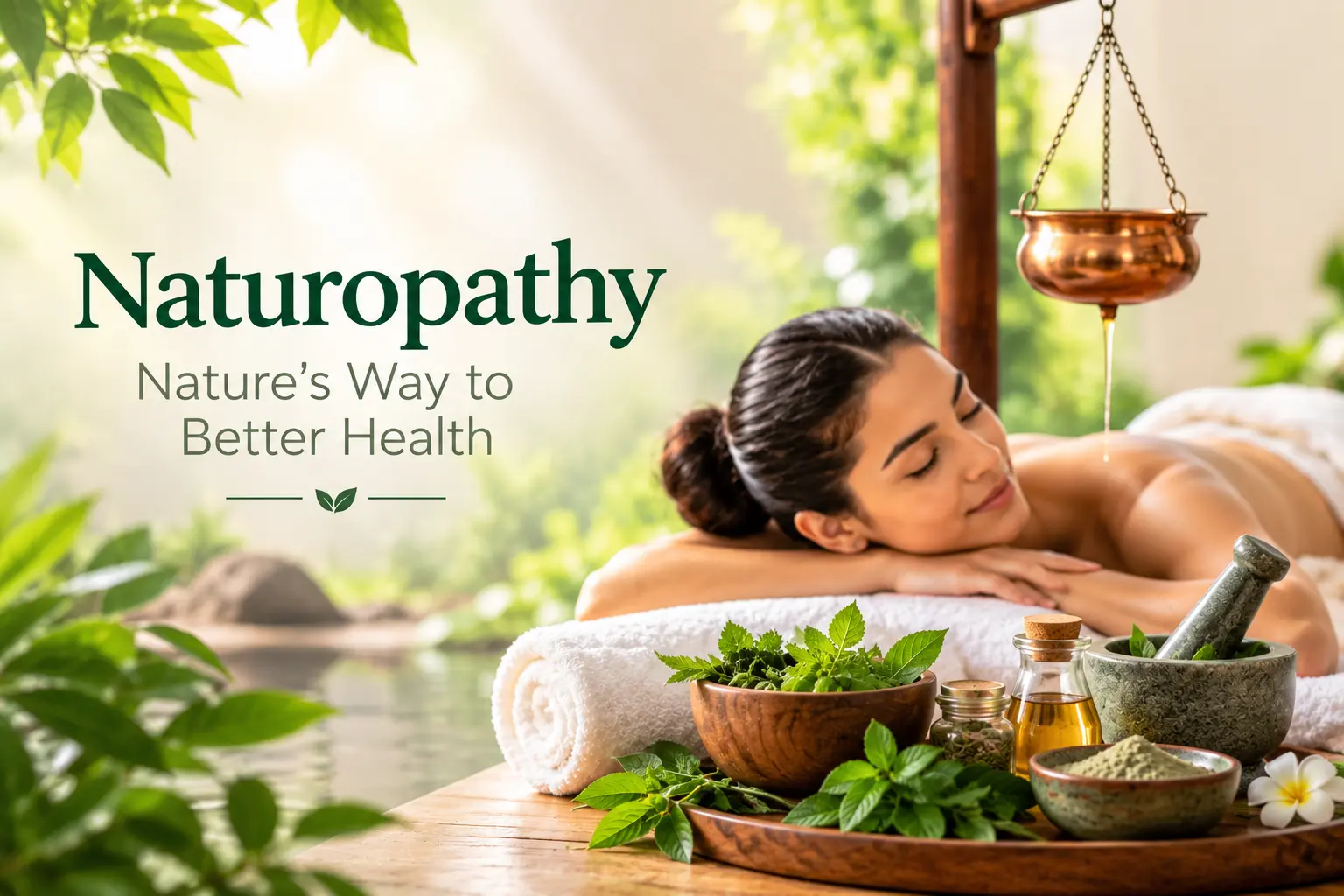
Ayurveda- Abhyanga, Shirodhara, herbal practices, Panchakarma-related therapies and lifestyle routines
Personalization:
Naturopathy- Lifestyle and wellness needs are commonly considered
Ayurveda- Individual constitution and traditional Ayurvedic principles are commonly considered
Equipment:
Naturopathy- May use hydrotherapy, steam therapy and other wellness equipment
Ayurveda- May use specialized equipment for therapies such as Shirodhara and massage
One of the main differences is the traditional philosophy behind each approach.
Naturopathy emphasizes the relationship between lifestyle, nature, nutrition, physical activity, rest, and overall wellness. It commonly encourages healthy daily habits and natural wellness practices.
Ayurveda follows a distinct traditional Indian framework. It considers balance within the body and mind and incorporates traditional concepts related to diet, lifestyle, herbs, therapies, and individual constitution.
While the terminology and principles differ, both approaches place importance on maintaining a healthy lifestyle and supporting overall well-being.
There can be some overlap between the therapies used in naturopathy and Ayurveda.
For example, massage, yoga, meditation, steam-based practices, and certain relaxation techniques may be found in wellness centres offering different traditional or natural approaches.
However, the purpose, methodology, and traditional framework in which a therapy is provided can differ.
For this reason, a wellness centre should clearly define the type of therapy it offers and ensure that practitioners are appropriately trained.
Professional equipment can play an important role in creating a safe, organized, and comfortable wellness environment.
Naturopathy centres may use equipment for:
Similarly, Ayurvedic wellness centres may require specialized equipment for therapies such as Shirodhara, massage, and other traditional practices.
When selecting equipment, wellness professionals should consider build quality, material, ease of cleaning, usability, safety features, durability, and after-sales support.
There is no universal answer to which approach is better.
Naturopathy and Ayurveda follow different philosophies and may be used for different wellness purposes. The right approach depends on the individual's preferences, goals, the services offered by the wellness centre, and guidance from a qualified practitioner.
People should also avoid using natural therapies as a substitute for necessary medical diagnosis or treatment.
If you are setting up or upgrading a naturopathy, Ayurveda, or holistic wellness centre, selecting reliable equipment is an important consideration.
Look for equipment that offers:
For professional wellness environments, quality equipment can help create a more organized and consistent experience for practitioners and clients.
AYURVAD, a wellness equipment brand from S G Safety Corporation, focuses on providing Naturopathy and Shirodhara equipment for wellness centres, naturopathy clinics, therapists, and practitioners.
Backed by the technical and service experience of S G Safety Corporation, AYURVAD aims to provide practical, reliable, and quality-focused equipment designed for professional wellness environments.
From Naturopathy equipment to Shirodhara solutions, AYURVAD is focused on supporting wellness professionals with equipment designed for practical use.
Naturopathy and Ayurveda are both holistic approaches to wellness, but they have different origins, philosophies, and traditional practices.
Naturopathy generally focuses on natural lifestyle practices, nutrition, physical activity, relaxation, and nature-based wellness methods. Ayurveda is a traditional Indian system based on its own principles concerning balance, individual constitution, lifestyle, diet, and traditional therapies.
Understanding these differences can help wellness professionals and individuals make more informed choices about the type of wellness approach and equipment that best fits their needs.
This article is provided for general educational and informational purposes only. It is not intended to diagnose, treat, cure, or prevent any disease or medical condition. Naturopathy and Ayurveda practices should be undertaken under the guidance of appropriately qualified professionals. For medical concerns, consult a qualified healthcare professional.





You need to Sign in to view this feature

This address will be removed from this list
 english